Souvenir Ideas from Nepal
Souvenir Ideas from Nepal
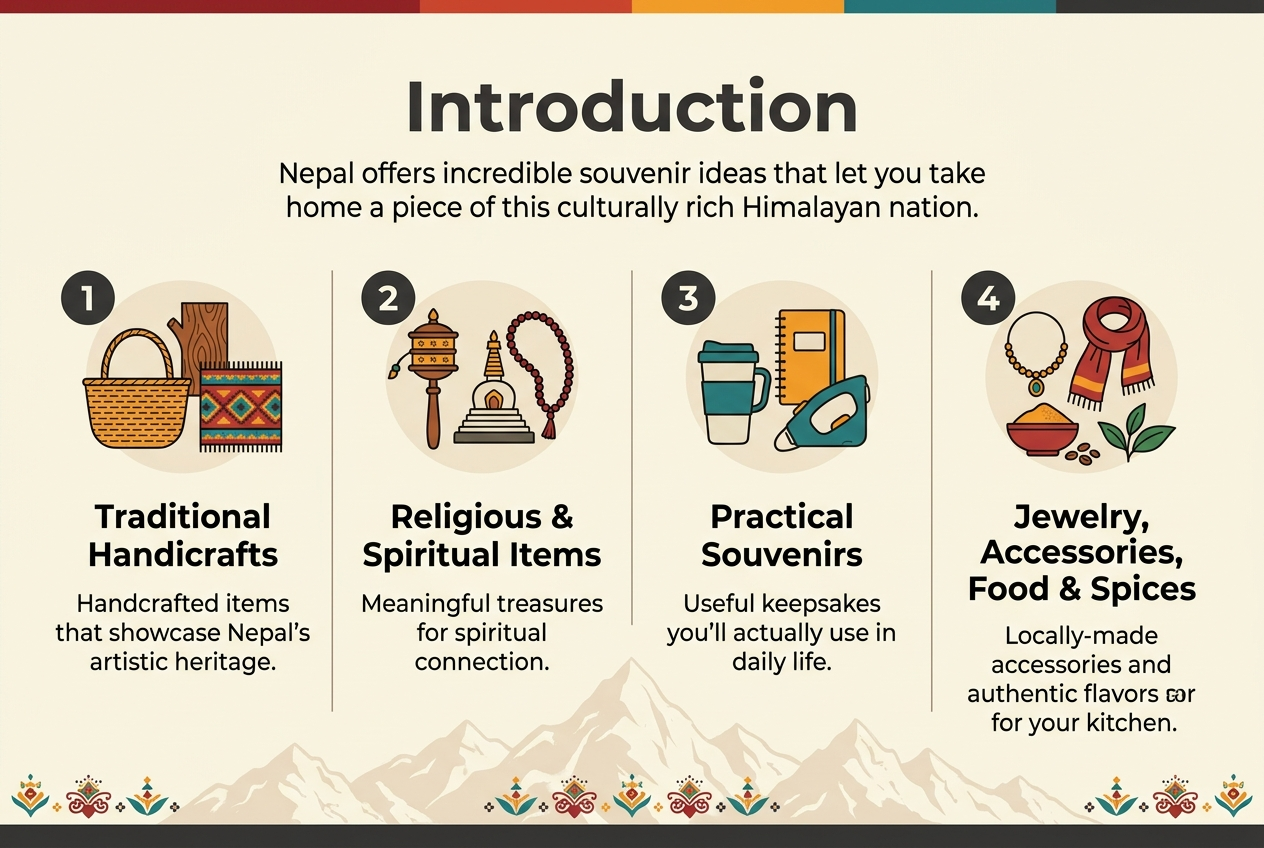
Nepal offers incredible souvenir ideas that let you take home a piece of this culturally rich Himalayan nation. Travellers visiting Nepal will find authentic keepsakes ranging from handcrafted items to spiritual treasures that make perfect gifts or personal mementos.
This guide covers traditional handicrafts that showcase Nepal’s artistic heritage, religious and spiritual items for meaningful connections, and practical souvenirs you’ll actually use in daily life. You’ll also discover locally-made jewellery and accessories plus authentic food items and spices that bring Nepal’s flavours to your kitchen. We have summarised the details of souvenir in four parts as below:
1.Traditional Handicrafts That Capture Nepal’s Cultural Heritage (Part 1)
2. Religious and Spiritual Keepsakes for Meaningful Memories (Part 2)
3. Practical Souvenirs That Enhance Daily Life (Part 3)
4. Jewelry and Accessories That Showcase Local Craftsmanship & Food Items and Spices That Bring Nepal Home (Part 4)
PART 1
Traditional Handicrafts That Capture Nepal’s Cultural Heritage
Handwoven Pashmina Shawls for Luxurious Warmth
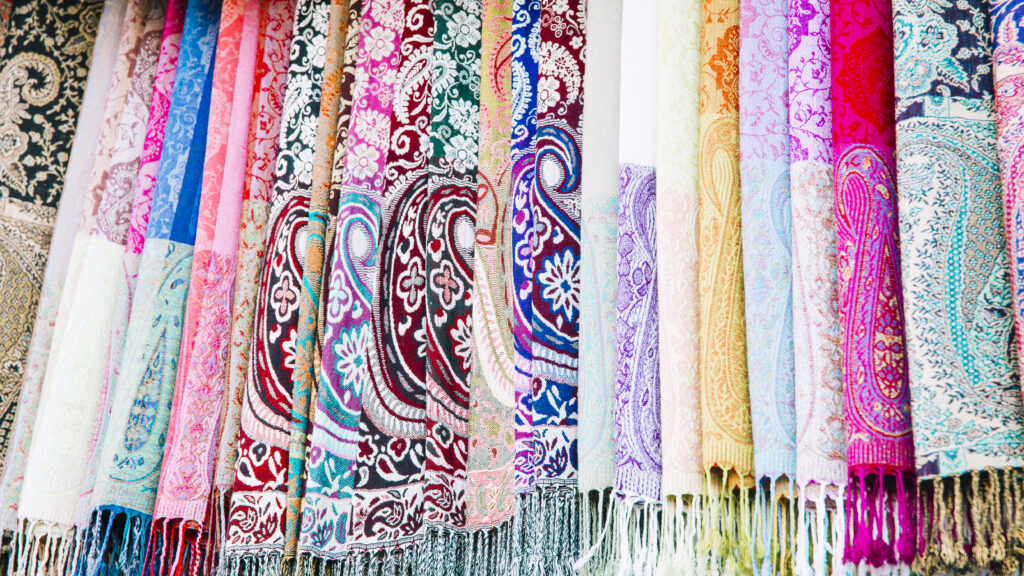
Nepal’s pashmina industry represents centuries of textile mastery, with artisans creating some of the world’s finest cashmere products from the soft undercoat of Himalayan goats. These shawls aren’t just fashion accessories—they’re wearable pieces of Nepali heritage that showcase the country’s dedication to quality craftsmanship.
Authentic Nepali pashminas come from the Changthang region, where goats naturally develop incredibly fine undercoat fibers to survive harsh mountain winters. The collection process happens once yearly during spring molting season, making genuine pashmina a precious commodity. Local artisans hand-spin these fibers into yarn before weaving them on traditional looms, a process that can take weeks for a single shawl.
The quality difference between machine-made imitations and hand-crafted Nepali pashminas is immediately apparent. Genuine pieces feel incredibly soft yet surprisingly strong, with a natural sheen that synthetic materials can’t replicate. When shopping, look for slightly irregular weaving patterns—perfect uniformity often indicates machine production. Real pashmina also passes the ring test, meaning a full-size shawl can slide through a wedding ring due to its fine weave.
Colors range from natural cream and brown to rich jewel tones achieved through traditional dyeing methods. Many artisans use natural dyes derived from local plants, creating unique color variations that tell stories of Nepal’s diverse landscape. Hand-embroidered designs featuring traditional motifs like paisleys, lotus flowers, or geometric patterns add artistic value and cultural significance.
Intricate Thangka Paintings for Spiritual Decoration
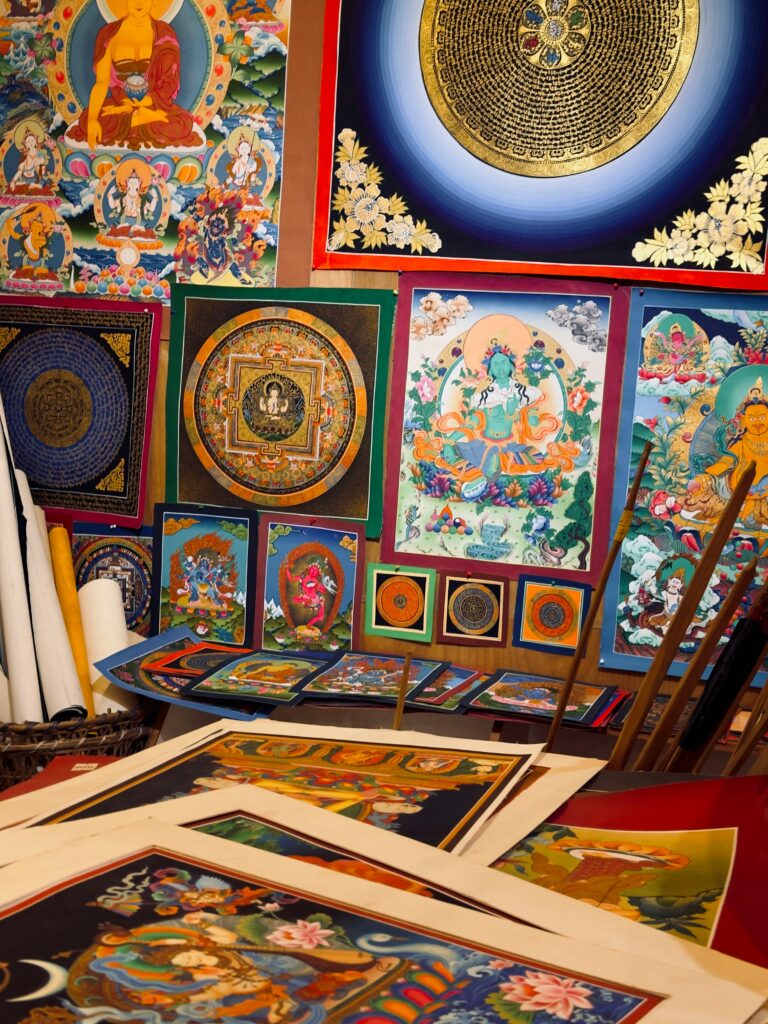
Thangka paintings represent one of Tibet and Nepal’s most sophisticated art forms, combining religious devotion with extraordinary artistic skill. These sacred scroll paintings serve as meditation aids, teaching tools, and spiritual focal points in Buddhist practice, making them deeply meaningful souvenirs for anyone interested in Eastern spirituality or fine art.
Master thangka painters undergo years of training to perfect their technique, learning precise proportional rules that govern how Buddhist deities, mandalas, and sacred symbols should be depicted. Each painting follows strict iconographic guidelines passed down through generations, ensuring authenticity and spiritual accuracy. The creation process can take months, with artists carefully mixing mineral pigments, applying gold leaf details, and blessing the completed work.
Traditional thangkas are painted on cotton or silk canvas using natural pigments ground from minerals like lapis lazuli for blue, cinnabar for red, and real gold for highlights. This creates vibrant colors that remain brilliant for centuries when properly cared for. The most common subjects include Buddha figures, Green and White Tara, Medicine Buddha, and complex mandala designs that represent cosmic order and spiritual transformation.
Size options range from small meditation pieces perfect for personal altars to large ceremonial thangkas suitable for wall display. Antique pieces command premium prices, but contemporary thangkas created by skilled artisans offer excellent value while supporting living artists. Many shops in Kathmandu’s Thamel district and Patan’s artisan quarters offer authentic pieces with certificates of authenticity.
Carved Wooden Masks for Authentic Nepali Art
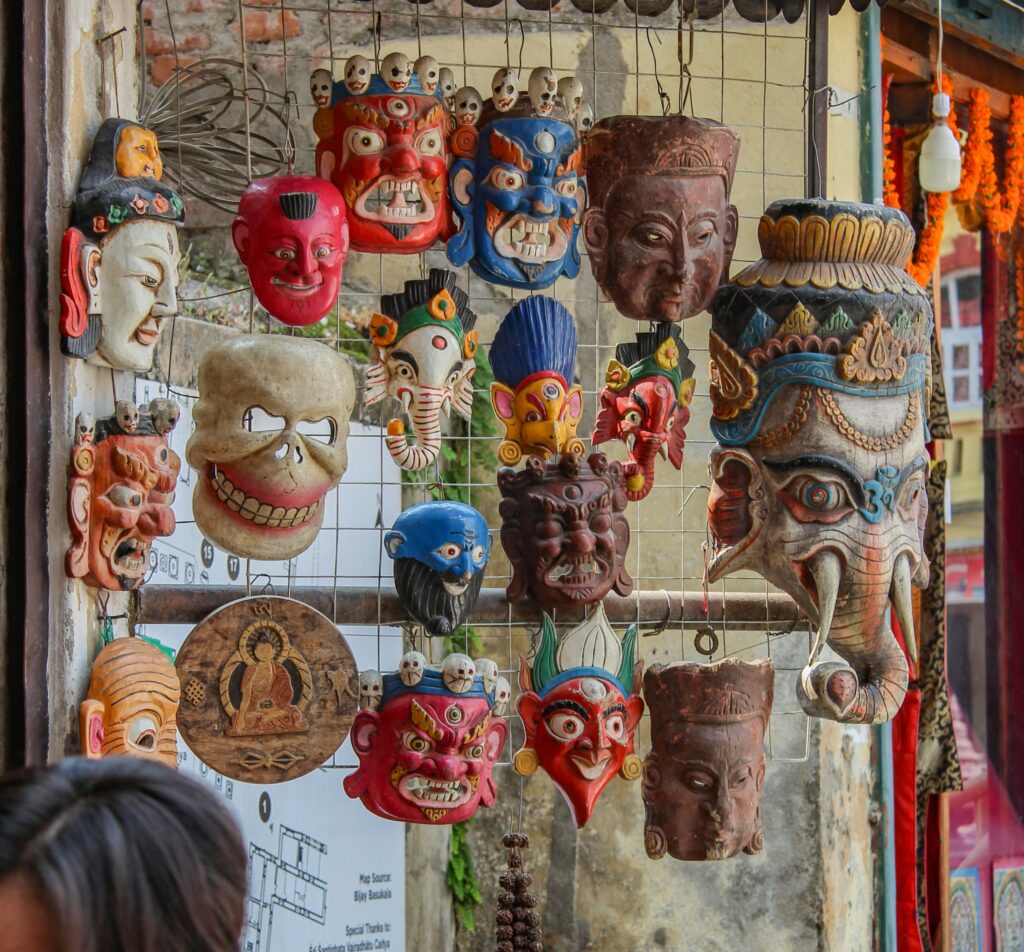
Nepal’s mask-making tradition reflects the country’s rich festival culture and ancient storytelling practices. These aren’t tourist trinkets—they’re functional art pieces used in religious ceremonies, cultural performances, and traditional dance dramas that have entertained Nepali communities for generations.
Newar artisans in the Kathmandu Valley excel at creating masks from locally sourced woods like pine, cedar, and rhododendron. The carving process begins with selecting seasoned wood that won’t crack or warp over time. Artists then hand-carve facial features using traditional tools, paying careful attention to proportions that convey specific emotions or character traits associated with different deities or folklore figures.
Popular mask designs include Bhairav (the fierce form of Shiva), Ganesh, various demon characters from Nepali mythology, and animal spirits. Each mask tells a story—fierce expressions ward off evil spirits, while peaceful faces invite good fortune and prosperity. The painting process uses natural pigments and follows traditional color symbolism: red for power and passion, blue for wisdom, white for purity, and gold for divine energy.
Contemporary artisans also create decorative masks inspired by traditional designs but sized for home display rather than performance use. These pieces work beautifully as wall art, bringing Nepali cultural energy into modern living spaces. Quality masks feature smooth finish work, precisely carved details, and paint that won’t chip or fade with normal handling.
Handmade Singing Bowls for Meditation and Healing
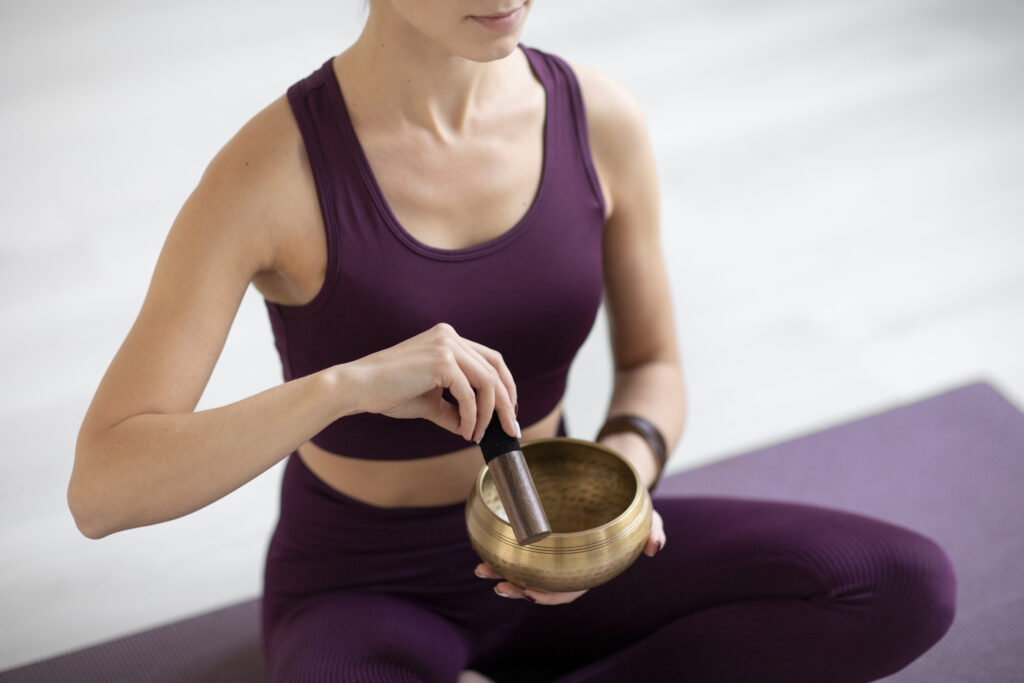
Tibetan singing bowls crafted in Nepal combine metallurgy expertise with spiritual purpose, creating instruments that produce pure, resonant tones used for meditation, healing, and ceremonial practices. These aren’t mass-produced items—authentic bowls are hand-forged by artisans who understand both the technical requirements and spiritual significance of their craft.
Traditional bowls contain seven metals representing celestial bodies: gold (Sun), silver (Moon), mercury (Mercury), copper (Venus), iron (Mars), tin (Jupiter), and lead (Saturn). Master craftsmen heat and hammer these alloys repeatedly, creating bowls with specific tonal qualities and harmonic resonances. The forging process requires precise timing and temperature control—skills passed down through family workshops for generations.
Bowl sizes range from palm-sized pieces producing high, clear tones to large ceremonial bowls creating deep, sustained vibrations. Sound quality depends on metal composition, wall thickness, and rim shape. High-quality bowls produce multiple harmonic overtones that create complex, meditative soundscapes when played with wooden mallets or leather-wrapped strikers.
Many shops offer sound testing before purchase, allowing buyers to experience each bowl’s unique tonal character. Authentic bowls often show slight irregularities in shape or surface texture—signs of hand-forging that actually enhance acoustic properties. Prices vary based on size, age, and craftsmanship quality, with antique pieces commanding premium prices among serious collectors and meditation practitioners.
In the next part we will explain about Religious and Spiritual Keepsakes for Meaningful Memories (Part 2).
Popular Articles